

Stress-Fed Digestive Issues: Why Stress May Be Causing Your Bloating, IBS or Constipation
Chronic bloating, IBS-type symptoms or constipation that worsen during busy or emotional periods may be driven by stress physiology — not just food. Discover how nervous system overload disrupts digestion and what creates lasting regulation.

If your digestive symptoms flare under pressure, it may not be the food.
Bloating during busy weeks.
Constipation when life feels overwhelming.
Urgency before meetings.
Hormone shifts that destabilise digestion.
For many high-functioning adults, gut symptoms are stress-fed — driven by nervous system overload rather than dietary failure.
And stress isn’t always just busyness.
It can be trauma.
It can be grief.
It can be prolonged emotional strain that the body has never fully resolved.
What Are Stress-Fed Digestive Issues?
Stress-fed digestive issues occur when chronic nervous system activation disrupts gut regulation.
The digestive system is governed by the autonomic nervous system. When the body perceives threat — whether from workload, burnout, emotional stress, trauma, grief or prolonged pressure — it prioritises survival over digestion.
This shift can result in:
Reduced stomach acid production
Slowed gut motility (constipation)
Accelerated gut motility (urgency or loose stools)
Increased bloating and abdominal discomfort
Hormone-related digestive disruption
Changes in the gut microbiome
These symptoms are physiological.
They are not imagined.
And they are not simply caused by eating the wrong thing.
Trauma and the Body: When Stress Becomes Stored Physiology
Trauma is not only psychological — it is physiological.
When the nervous system experiences overwhelm without resolution, the body can remain in a heightened stress response long after the event has passed.
Over time this may present as:
Chronic muscle tension
Shallow breathing patterns
Hypervigilance
Sleep disturbance
Digestive irregularity
Persistent gut sensitivity
If the body remains in a low-level “threat” state, digestion never fully returns to rest-and-digest mode.
The gut is particularly sensitive to unresolved nervous system activation.
The issue is not just what is being eaten.
It is how safe the body feels while digesting.
The Biological Impact of Grief on Digestion
Grief has a measurable physiological impact.
It alters cortisol rhythms, sleep patterns, immune regulation and hormone balance. It can suppress appetite in some and drive emotional eating in others. It can slow motility or accelerate it unpredictably.
During significant loss, many people experience:
Constipation
Bloating
Reflux
Loose stools
Increased food sensitivities
Fatigue alongside digestive change
This is not weakness.
It is the nervous system adapting to profound change.
Understanding grief as a biological stressor changes the strategy for recovery. Digestive support must be regulation-focused, not restrictive.
The Gut–Brain Axis: Why Stress Impacts IBS and Bloating
The gut contains its own nervous system — the enteric nervous system — and communicates continuously with the brain via the vagus nerve.
When stress hormones such as cortisol and adrenaline rise:
Blood flow is diverted away from digestion
Digestive enzyme production decreases
Peristalsis becomes irregular
Visceral sensitivity increases
Inflammatory pathways may activate
This is why many people with IBS notice that symptoms worsen during stressful periods — even when their diet remains unchanged.
For many of the clients I support in Dublin and online across Ireland, stress physiology — including trauma history or grief — is the missing link in long-term digestive recovery.
Why Food-Only Approaches Often Fail
Low FODMAP diets, removing gluten or dairy, increasing fibre, or adding probiotics can all be useful tools.
But if nervous system dysregulation remains unaddressed, symptoms often return.
Lasting digestive stability requires:
Nervous system regulation
Hormone-aware adjustments
Personalised nutrition
Sustainable lifestyle pacing
Food matters-Regulation matters more.
Signs Your Digestive Symptoms May Be Stress-Driven
You may recognise this pattern if:
Symptoms worsen during busy or emotionally intense periods
Bloating increases during conflict or pressure
Constipation appears during travel or change
Sleep disruption coincides with gut flares
Hormonal shifts affect bowel habits
You feel wired yet exhausted
Symptoms began after a stressful or traumatic event
This pattern suggests physiological stress involvement rather than simple food intolerance.
A Nervous-System Aware Approach to Gut Health
In my 1-to-1 practice, I focus on identifying the biological drivers behind digestive dysfunction.
Support may include:
Nervous system regulation strategies
Strategic fibre and motility adjustments
Stomach acid support where appropriate
Blood sugar stabilisation
Hormone-aware nutrition planning
Lifestyle pacing that supports recovery
When the nervous system stabilises, digestion often becomes more predictable.
The goal is not symptom suppression.
It is resilience.
Gut Health Support in Dublin & Online Across Ireland
If you are experiencing stress-related bloating, IBS, constipation, trauma-linked digestive sensitivity, or grief-related gut disruption, a structured and personalised approach may be the next step.
As a Dublin-based Nutritional Therapist working both in person and online across Ireland, I specialise in stress-driven digestive dysfunction and gut–brain axis regulation.
If your symptoms fluctuate with stress, pressure or life events, you may not need another diet.
If your digestive symptoms fluctuate with stress, trauma, grief or prolonged pressure, a structured and personalised approach may be the next step.
You may not need another diet.
You may need regulation.

Eat your stress goodbye - how to build a stress reducing diet
If you’ve been feeling more stressed out than usual lately, it’s important to know which foods are best to choose and which to avoid when it comes to combating stress and helping you to deal with feelings of stress and anxiety. Let me show you the best ingredients you should be adding into your diet.
We have all been feeling stressed out of late and turning to the foods that are our traditional ‘comfort’ foods – think big meals, take-out, fatty foods, sweet foods, and alcohol.
Let’s face it – during this pandemic we have all found some comfort in a tasty meal and a bottle of beer or glass of wine.

When we turn to unhealthy foods we can feel better temporarily, but in the long run, we will feel worse. When our body is not getting the right nutrition, we can begin to feel less energetic, more lethargic, and in some cases less able to concentrate and focus. All of this can lead to even more stress, as the gut struggles to cope.
We know it’s not a good permanent solution, so as we move through the phases of coming out of lockdown, why not move through the stages of supporting our gut health, which in turn will help us feel less stressed.
Foods that Fight Stress
If you’ve been feeling more stressed out than usual lately, it’s important to know which foods are best to choose and which to avoid when it comes to combating stress and helping you to deal with feelings of stress and anxiety. The best way to fight stress is to have a healthy, balanced diet which includes a moderate amount of each of the different food groups.

Filling up on foods such as whole grains, leafy vegetables, and lean proteins as the basic staples of the diet is the best way to ensure that your body gets the optimum amounts of nutrients to fight both physical and mental health problems.
When it comes to choosing the foods to eat, some have a range of great properties which help the body to combat stress. Choosing these stress-busting foods will help to heal and calm your mind permanently, rather than providing a temporary fix.
Some of the best stress-fighting foods include:
Avocado – Avocados are a creamy and versatile fruit which can be eaten in a range of different ways whether you enjoy it raw, made into sauces, dressings, and dips, or in a smoothie. These nutrient-dense fruits have the properties to stress-proof your body, thanks to their high glutathione content which specifically blocks the intestinal absorption of certain fats which cause oxidative damage. Avocados also contain higher levels of vitamin E, folate, and beta-carotene than any other fruit, which boosts their stress-busting properties. However, be careful with portion control when eating avocado, as it is high in fat.
Beef – Grass-fed beef is not only kinder to the planet and to animals, it is also good for people, too. Grass-fed beef has a huge range of antioxidants, including beta-carotene and Vit-amins C and E, which can help your body to fight stress and anxiety. It is also lower in fat than grain-fed beef whilst being higher in omega-3. So, check your labels or ask the butcher to ensure that the beef your buying is Irish, as we are blessed that 80-90% of Irish cows diet is grass (the rest is fodder when its bad weather)
Green Leafy Vegetables – leafy, green vegetables should be a pivotal part of anyone’s diet. Along with helping to combat stress, leafy greens are full of nutrients and antioxidants which help to fight off disease and leave your body feeling healthier and more energized. Dark leafy greens, for example spinach, are especially good for you since they are rich in folate, which helps your body to produce more mood-regulating neurotransmitters such as serotonin, which is a ‘feel-good’ chemical. Making leafy greens a part of your diet will help you to feel happier and less stressed out overall.
Oatmeal – Oatmeal is great in that it can be a filling comfort food, but also has many healthy properties to make you feel better from the inside out. A complex carbohydrate, eating oatmeal causes your brain to produce higher levels of the feel-good chemical serotonin, helping you to feel calmer and less stressed. Studies have shown that kids who choose oatmeal for breakfast tend to be much sharper throughout the morning in school compared to kids who had alternative morning meals.
Walnuts – If you are looking for a healthy snacking option which will help you to stay better in control of your stress levels, walnuts are a great choice. There is no denying the sweet, pleasant flavour of walnuts and they can be a tasty snack for in-between meals, add to your oats or as part of a desert. A versatile nut, walnuts are great for salads, or add them to a sweet treat such as coffee and walnut cake.
Blueberries – If you’re feeling stressed out and reaching for the snacks, swapping chocolate or crisps for one of the best superfoods is a great way to help you deal with your stress levels and achieve a higher level of calm. Blueberries have some of the highest levels of antioxidants, especially antho-cyanin, which means that this berry has been linked to a wide range of health benefits including sharper cognition, better focus, and a clearer mind – all of which can help you to better deal with stress.
Pistachios – another food which is great for snacking on and can also help to combat stress and anxiety in the long term is pistachios. Studies have found that simply eating two small, snack-size portions of pistachios per day can lower vascular constriction when you are stressed, putting less pressure on your heart by further dilating your arteries. Along with this, the rhythmic, repetitive act of shelling pistachios can be quite therapeutic!
Chamomile Tea – Of course, it is not all about what you are eating when it comes to managing stress; what you are drinking can also alleviate or worsen the stress you are feeling. Drinking liquids which are high in sugars and caffeine, such as coffee, energy drinks or soda, can increase your stress levels if consumed regularly. Chamomile tea has long been used as a natural bedtime soother, and it has also been used in clinical trials, which determined that chamomile tea is effective in reducing the symptoms of generalized anxiety disorder.
Chocolate – Although it is usually seen as an unhealthy treat, there is an undeniable link between chocolate and our mood. Studies have shown that eating chocolate can make you happier. However, that does not mean that you can start munching on chocolate bars every time you're stressed out – chocolate works best as a de-stressor when eaten in moderation and as part of a healthy and balanced diet. Dark chocolate is best for you, as it contains more flavonoids and polyphenols, two hugely important antioxidants which can help combat stress.
Fermented foods – last but not least, eating fermented foods such as Kefir or yogurt can help to keep your gut healthy, which in turn will help to improve your mental health and reduce stress levels. The beneficial bacteria which are found in fermented foods such as yogurt have a direct effect on your brain chemistry and transmit positive mood and behaviour regulating signals to your brain via the Vagus nerve.
Putting Together Your Diet Plan
Planning your meals wisely is key to not only staying physically fit and healthy, but also to staying mentally strong and being able to best manage your levels of stress.
Knowing which foods to avoid and which are the best to reach for to snack on when you are feeling worried and anxious is important to helping you get control over your emotions and fears.

When you are feeling stressed, you may be tempted to reach for classic ‘comfort foods’ – usually foods which are laden with sugar, very starchy, or greasy. However, although these foods can make you feel momentarily better, they will make you feel worse in the long run.
Having stress-busting snacks such as fresh berries, dark chocolate, yogurt, walnuts or pistachios, or even a fruit smoothie with avocado and leafy greens in it can help you to feel better in both the short and long term when it comes to stress.
When it comes to combating and dealing with stress in the long run, it is important to make sure that for the most part, you are eating a diet which is healthy and balanced.
In order to stay on track, it’s a good idea to make a meal plan for your week and plan ahead to make sure that you have a good selection of these stress-busting foods in your kitchen to make meals and snacks from when you’re feeling like stress-eating.
Making sure that most of your meals include foods such as lean proteins and leafy green vegetables will not only make you feel healthier overall, but can improve your mental health and stress levels, too.
A good example of a healthy, stress-busting menu would be:
Breakfast: Oatmeal with berries and walnuts or a fruit smoothie with avocado and berries
Mid-morning snack: Natural yogurt with fruit or a palmful of pistachio nuts
Lunch: A whole-grain pasta salad filled with plenty of leafy greens
Afternoon snack: Dark chocolate with a palmful of pistachio nuts.
Dinner: Grass-fed beef with vegetables
Before bed: Chamomile tea
Of course, you do not need to stick to this menu – but it gives you a good idea!
Remember to exercise good portion control when eating foods such as nuts, chocolate, yogurt or avocado!
As the saying goes, you are what you eat – so make sure that first and foremost, you are filling yourself up with foods which are good for your mental health.
Want more help creating a stress reducing diet? Find out more about working with me so we can design a tailored plan that works for you.
8 simple ways to beat the bloat
One in 10 Americans say they suffer from bloating regularly, even when they haven't eaten a large meal. Discover my eight simple tips on reducing bloating that you can implement right now, without fancy ingredients or big changes.
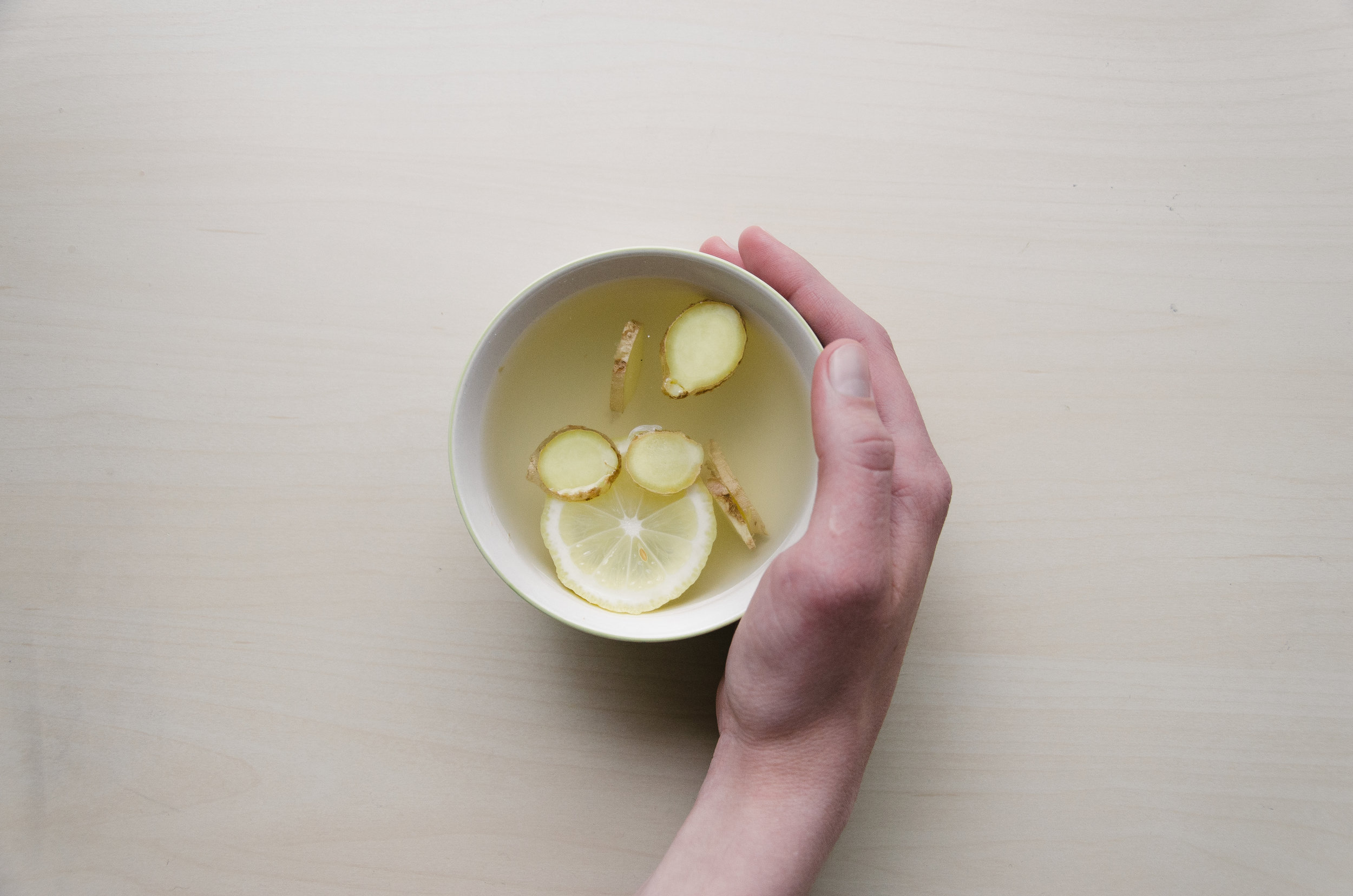
Drink tepid lemon water
Start your morning with a "Shower for your insides". Drinking half a lemon squeezed into a cup of boiled water, can help wake up your digestive organs and get it ready for the day ahead.
Think before you eat
Taking the time to think about what you are about to eat, can help get your digestive juices fired up. We need these juices, like saliva in the mouth, stomach acid and pancreatic enzymes in the gut to help us breakdown food so we can absorb their nutrients.
Chew your food
It sounds so simple but often we forget to chew our food up to 30 times! Ideally, we should chew our food until if we spat it out, we wouldn't recognise it anymore. Un-chewed food can cause bloat as it moves through the gut in larger particles.
Stay hydrated

Drink plenty of water throughout the day. Try keep most of your water intake away from meals.
This is so we do not dilute our digestive juices too much and gives us more chance of digesting food fully.
Ginger tea
Ginger helps relax the stomach muscles and is a good choice as a tea 15 minutes after meals to aid digestion. (If pregnant or breastfeeding, always consult your GP before adding extra ginger into your diet)
Check food labels
For bloat causing sugar alcohols, identified by usually ending in ‘ol’- sorbitol, xylitol, erythritol, mannitol, lactitol. Frequently found in ice cream, sugar free gum, sweets, cakes, and cookies. These sugar alcohols are a lot less lower in calories but are major contributors of bloat for a lot of people.
Add in gut loving foods

Glutamine found in protein, appears to have a role in maintaining proper barriers within the intestine.
Incorporate foods rich in glutamine such as protein-rich foods like beef, chicken, fish, dairy products, eggs, vegetables like beans, beetroot, cabbage, spinach, carrots, parsley, vegetable juices and also in whole wheat, brussels sprouts, celery, kale and fermented foods like miso.
A delicious drink of bone broth (a quick google will give you a tasty recipe) is a quick and easily digested way to support gut health, if you have a particularly bad gut health day.
Keep a Food Diary
Tried the above and still feeling bloated? Try keep food a dairy, include bowel movements and mood and see if any patterns flag up that may be contributing to your bloat. Still at a loss? Contact me on any of my below handles and let us see if we can figure it out together.

How to flatten your own curve after lockdown
We’re trying our best to get used to the “new norm”, we are “holding on”, masking our fears with mantras like “were in this together” and we cant ignore the fact that “now more than ever” our belly is bulging, our jeans wont close, our energy is fading and were feeling overall blah! Let me help you beat the bloat with my simple tips.
Let’s be honest, we have all gone through different phases of throughout this pandemic.
We started off great, eating healthy, home workouts, banana bread making, and our big night out was garden bingo or the Zoom family quiz night (remember them?)
This was great craic, sure it was only meant to be for a couple of weeks, right?
Wrong!
As more announcements were made and restrictions were increased, it threw new fear and stress into our world and we found ourselves ditching the workouts for a lie in.
Banana bread has long been traded in for a big crusty white sourdough, smothered in butter and family zoom quiz nights was only tolerable with a bucket of Gin and copious amounts of salty snacks.
(Some of us garden bingo participants are still lying low, from incidents of a few too many and telling Mrs. (nosey) Jones next door what we really thought of her)
We’re trying our best to get used to the “new norm”, we are “holding on”, masking our fears with mantras like “were in this together” and we cant ignore the fact that “now more than ever” our belly is bulging, our jeans wont close, our energy is fading and were feeling overall blah!
As phases, are getting delayed and we still feel a bit in limbo of when it will all end, it is hard to try and get into a healthier eating pattern. The more pressure we put on ourselves, the harder it becomes. So why not take it slow and try some of Humblegut’s steps, to ease into making a few healthier habits?
Remember to focus more on adding good stuff in, rather than cutting whole food groups out.
Eat your vegetables
August is a great month for a huge range of seasonal vegetables, giving us no excuse not to eat a rainbow of colourful foods. Each colour represents different nutritious elements. Orange vegetables, for example, contain beta-carotene, which is converted in our bodies into vitamin A. Green vegetables are rich in iron and folic acid.
Give vegetables the main role on your plate, accompanying each portion with a protein. Aim to eat 2-3 cups of veg throughout the day and you are sure to feel the difference.

Not a big fan of veg? Struggling to get the kids to eat them? Try blending them into soups and sauces e.g. puree carrots and blend them into Bolognese sauce.
Sick of buying loads of veg in the big shop, only for them to go out of date?
Try tinned or frozen. Both are packaged immediate after harvest, which helps contains their many nutrients. Just check the label in case the manufacturer has added salt, sugar, or additives.
Eat healthy fats
Good fats help lower your cholesterol level by lowering our “bad” cholesterol (LDL) and increasing our “good” cholesterol (HDL)
So how can you include them in your diet?
Oily fish contain unsaturated fats, so are an excellent choice for a healthy heart. Try adding a fatty fish such as salmon, mackerel, herring, or sardines 2-3 times a week. These fish are an excellent choice for lunches or light bites. Smoked salmon is a perfect breakfast option.
Avocados are a perfect source of unsaturated fats. It is so delicious in salads, guacamole or simply on toast.
A handful of unsalted nuts every day can be a great afternoon snack. You can eat them over salads, pasta, stews or just as a snack.
For a healthy individual seeking a balanced diet, then 30% of daily caloric requirements should come from healthy fat. Fat is a source of energy, vitamin A, vitamin D, vitamin E and essential fatty acids (such as omega 3 and omega 6).
Stay Hydrated
An adult needs 1.5-2 litres of fluids every day, and the best thirst quencher is of course water. The good news: you can always keep it interesting by adding slices of strawberries, oranges, lemon, cucumber etc
Eat mindfully and cook homemade meals
Healthy eating is not only what you eat but also how you eat it. Whenever possible eat at the table, avoid eating on the go or in front of the TV. Make each meal a pleasurable experience, where you can concentrate on the taste, texture, and smell of your delicious food.
Take your time. Pause briefly between bites; this will not only make eating a better experience but also kick-start the digestion process.

Chew carefully. Depending on the texture of the food it can take up to 30 chews to properly chew your food. Take smaller mouthfuls. This will increase the taste stimuli in your mouth. Don’t take a new spoonful unless the previous one has been swallowed.
Avoid distractions during the meal. Put your phone away and enjoy what is on your plate and be aware of your portion size.
Cook a meal yourself as much as possible.
Make soluble and freeze in portions for a handy meal when you’re too tired to cook. When you cook yourself, you know exactly what is on your plate and you avoid processed foods. If using jars or tins, be aware of any additional ingredients; they usually contain a lot of salt, sugar, and preservatives. A sauce or herb mixture is easy to make yourself, therefore natural and healthier than shop alternatives.
Introduce a non-meat day
Eating meat-free for one day a week will have positive effects on yourself and the environment, by avoiding meat 1 day per week, you can save about 7% of the share of the greenhouse effect. Fortunately, there are many tasty ways to replace meat.
Vegetarian dishes do not contain meat, fish, poultry, and no animal by-products such as gelatine and animal fat. Vegan dishes do not contain any animal products at all as well as no dairy and eggs.
There are many other plant-based proteins sources such as grains and legumes and introducing these can have a positive affect on our gut health. Try a chickpea curry (email me for a free recipe)
Reinvent breakfast and lunch
Eat smart. Swap the toast and sandwiches for more varied meals. By keeping variety in your diet, you get a bigger selection of nutrients. You’ll also never get bored.
What does a good breakfast consist of? Fibre-rich carbohydrates (wholegrain cereals, fruit, vegetables), protein (Natural yogurt, cheese, egg) and good fats (avocado, nuts, seeds).
Bread isn’t out, just keep it to a minimum and check the labels for good quality ingredients, rather than a host of additives and preservatives.
Get more vegetables in your diet by opting for a salad, add in some raw vegetables, like grated carrot or broccoli heads, some legumes and nuts and you have a salad ready in no time.
Avoid hidden ingredients
Many products contain hidden sugar and salt without you noticing, which means you might consume more of it than the recommended amounts. With these tips, you can prevent that.
Sugar, like starch and fibre, is a carbohydrate. We receive from 40% to 70% of our energy from carbs. But what we do not need at all are added sugars such as those in soft drinks or coffee.
Our body does not need salt but does need sodium, a mineral that is found in salt. But careful, as too much sodium causes high blood pressure.
Cutting down is merely a matter of getting used to less sugar and salt. If you start eating less salty foods for a while and skip the sugar in your coffee, you will be surprised how quickly your taste buds get used to it.
It is not always easy to read the label to see how much added sugar a product contains. That is because there are dozens of different names for different types of sugar. You can unmask most of them by looking for words that end with -ose, -syrup, -honey, or -nectar. These are the most common sugars: corn syrup, fructose, galactose, glucose, lactose, maltose, sucrose, agave nectar.

A glass of freshly squeezed orange juice is perceived to be healthy, but unfortunately, as it contains a lot of vitamin C, but ne glass (250 ml) contains about 30 grams of sugar- one glass is over the recommended daily amount of sugar!
Himalayan salt, sea salt or Celtic salt. No matter how special and healthy it sounds, salt is salt. Different types of salt may contain besides sodium, minerals such as magnesium and calcium.
The finer the salt, the better you taste it, and the less you need to use.
Check the label for the levels of salt and use this guide.
Low-Less that .3g per 100g
Medium- between 0.3-1.5
High-more than 1.5g per 100g